
Using a BMS to Create a Comfortable Environment
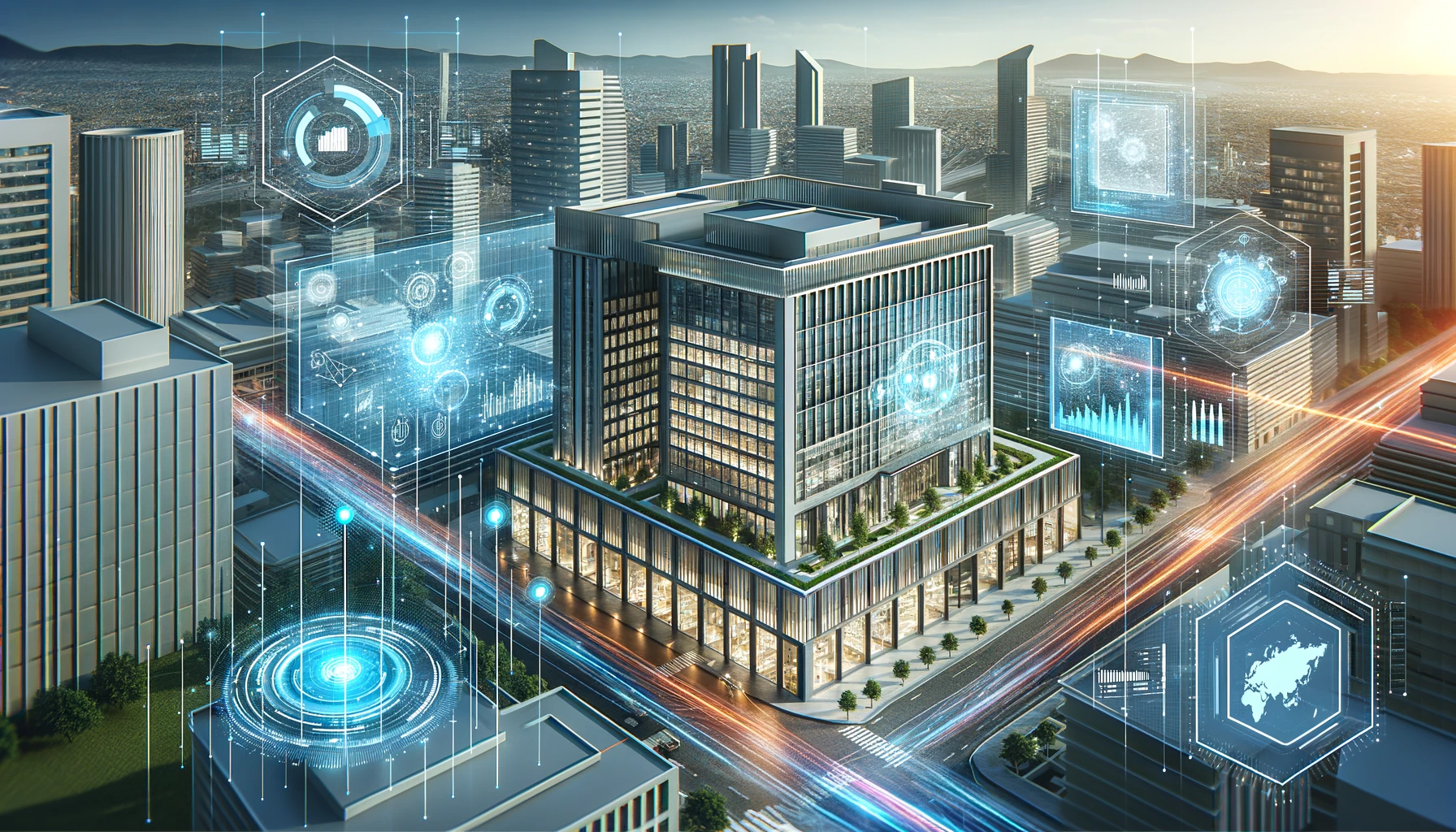
Four key areas
It is useful to start by asking what a smart building actually is. There are many different definitions, but they all share the understanding that a smart building uses technology not only to ensure efficient use of resources, but also to create a safe and comfortable environment for its occupants. We see four key areas of what people want from their smart buildings: flexible use of space; digital transformation; health and safety requirements; and sustainability.
The importance of flexible space use has grown recently. Covid changed the working environment: the impact of home and hybrid working on the office environment exceeded most people’s expectations. Companies large and small have reassessed their need for conventional office space. Some have given it up entirely, requiring buildings to be repurposed; others have restructured their working environments to reflect different working patterns. This has drawn particular attention to how to respond to the way spaces are actually used.
Digital transformation is happening in every area of our lives: from the technology used in our homes to the technology driving the growth of commercial «smart» buildings. The Internet of Things continues to grow exponentially, with a modern BMS typically handling significant volumes of data from potentially thousands of system devices that constantly send and receive information.
Health and safety has come under greater focus in many businesses, especially since the Covid pandemic. Ensuring that the working environment is not only safe but genuinely promotes the health and wellbeing of the people in the building is now a core objective.
The same goes for sustainability, which is usually one of the first considerations in the construction and operation of a new building. Looking at the statistics around decarbonizing the built environment, it is easy to see why. Around 40% of all energy is consumed by buildings (with heating and lighting the main consumers), and buildings account for 36% of global energy-related carbon dioxide emissions. That makes buildings the single largest source of energy consumption, with transport, processing and manufacturing the other major sources. Add rising energy prices and the wider adoption of environmental regulations, and it is easy to understand why sustainability ranks high on the construction agenda, with companies keen to continue the journey to net zero.
Different levels of automation
A BMS can help address all of these challenges. The level of automation determines how much control is available: from basic entry-level systems, where control is driven by room demand, to systems that effectively automate the entire operation of the building – heating and air conditioning, water supply and drainage, power supply and lighting. All of them can be networked to communicate with one another, enabling centralized control through an intelligent BMS.
Energy efficiency has been (and remains) a key driver of BMS development. The BACS energy efficiency classes in EN ISO 52120-1 provide a guide to the strategies that can be adopted through a demand- and control-based system. They range from the inefficiency of Class D to the highest efficiency, represented by Class A. By raising a building’s performance from Class C to Class A, energy savings of up to 30% can be achieved simply by improving the design and implementation of the control system.
However, one of the most important advances in improving buildings’ energy efficiency has actually come at the expense of their performance in terms of occupant wellbeing. Older buildings were generally well ventilated, whereas new buildings are designed to be practically airtight. While this certainly improves energy optimization, the result is that fresh air no longer enters buildings. Indoor air quality can therefore deteriorate through rising CO2 levels, higher humidity and a build-up of pollutants.
Air quality
Research shows that most people spend around 90% of their time indoors, so the indoor environment is key to our health – especially given that indoor pollution levels are typically 2–5 times higher. In fact, poor ventilation can account for over 50% of all sick leave. Even those spared such adverse effects can see office productivity fall by more than 10% due to poor indoor air quality. We have all been in buildings where poor ventilation created a stuffy environment that directly affects our cognitive performance.
It is not only the short-term effects on our health that need to be considered. Those continuously exposed to an unhealthy environment can suffer from a range of long-term conditions, including high blood pressure, an elevated heart rate, and kidney and bone problems.
Issues like these have raised the question of how control systems can be managed not only to improve energy efficiency but also to improve the health of the people who use them.
In essence, there are nine foundations of a healthy building: ventilation, air quality, thermal comfort, humidity, dust and pests, lighting, water quality, noise, and safety and security.
Returning to indoor conditions, research shows that a relative humidity of 40–60% is ideal for human health indoors and for reducing the viability of viruses. Since each person exhales roughly 8 liters of air per minute, the air released contains CO2 as well as droplets and aerosols. CO2 levels should be kept below a certain threshold to safeguard people’s wellbeing. Attention should also be paid to VOCs (volatile organic compounds) and to fine particulate matter PM2.5 – microscopic dust particles.
Monitoring and control
First, you need to be able to measure these values, and then to put controls in place. This is where an effective BMS comes in, playing a central role in achieving green building certifications (examples include Well V1, Reset, LBC, Fitwel and LEED). At its simplest, this may just be ventilation control, such as monitoring and regulating temperature. The next stage is demand-controlled ventilation (based on CO2), which improves air quality and saves energy. More effective still is demand-controlled ventilation with active filtration, which delivers more fresh air by dynamically analyzing outdoor air conditions, establishing precise control of air pressure differentials, generating the same volume of air and filtering out PM2.5 – while using less energy to do so.
Research shows that keeping CO2 below 1000 ppm can boost productivity by 2–18%. As noted, a humidity level of 40-60% is considered ideal, reducing virus transmission by up to 70%. By controlling indoor levels of volatile organic compounds (VOCs), sick building syndrome can be avoided, absenteeism reduced and productivity increased.
Connecting the dots
With the shift toward a more holistic approach to building management – one where the building actively contributes to the wellbeing of its users – the need to connect sensors and control devices is becoming ever more important. Solutions are now available that allow day-to-day building management tasks to be carried out from a single location via a cloud interface, with no additional gateway or software. Alarm notifications about potential issues, along with charts visualizing historical trends, can provide meaningful insight into building performance at any moment, helping to optimize building operation.
Intuitive online access can be provided via a desktop computer or smartphone. It is important that such interfaces support a range of communication protocols to optimize connectivity (wired or wireless) — BACnet, LoRaWan, M-Bus, Modbus and KNX — the protocols used in BMS.
Optimizing the potential of BMS
Digital transformation is one of the main drivers of smart building development.
The pandemic accelerated a shift in attitudes to work that has put employees’ needs at the center of the workplace. Creating an environment that is a pleasure to work in is an incentive for prospective employees. Once they are on board, that environment can actively contribute to their productivity and health by optimizing lighting, temperature, space utilization and air quality. While BMS undoubtedly continue to play an important role in reducing energy consumption, recognizing their potential for monitoring and controlling the building environment means they can also make a significant contribution to wellbeing.
Related news

Schneider Electric — Leader in the Ranking of BMS Suppliers
SmartStruxure is a new platform developed by Schneider Electric specialists that offers a line of hardware and software products for the Building automation systems segment. Schneider Electric is a major French engineering company that develops and manufactures power management solutions as well as integrated energy-efficiency solutions for the energy and infrastructure sectors, industrial enterprises, civil and residential construction, and data centers.

Schneider Electric Partner Meeting
Schneider Electric is a major French engineering company that develops and manufactures power management solutions as well as integrated energy-efficiency solutions for the energy and infrastructure sectors, industrial enterprises, civil and residential construction, and data centers. The corporation includes such companies as Merlin Gerin, Square D, Telemecanique, MGE UPS Systems, TAC, APC, Clipsal, Andover Controls, Merten, and Pelco. Today the company operates more than 200 plants. It produces low- and medium-voltage electrical equipment and automation products for industry and residential construction. The company employs 152384 people (2012 data). The company's revenue in 2012 amounted to 23.946 billion euros.
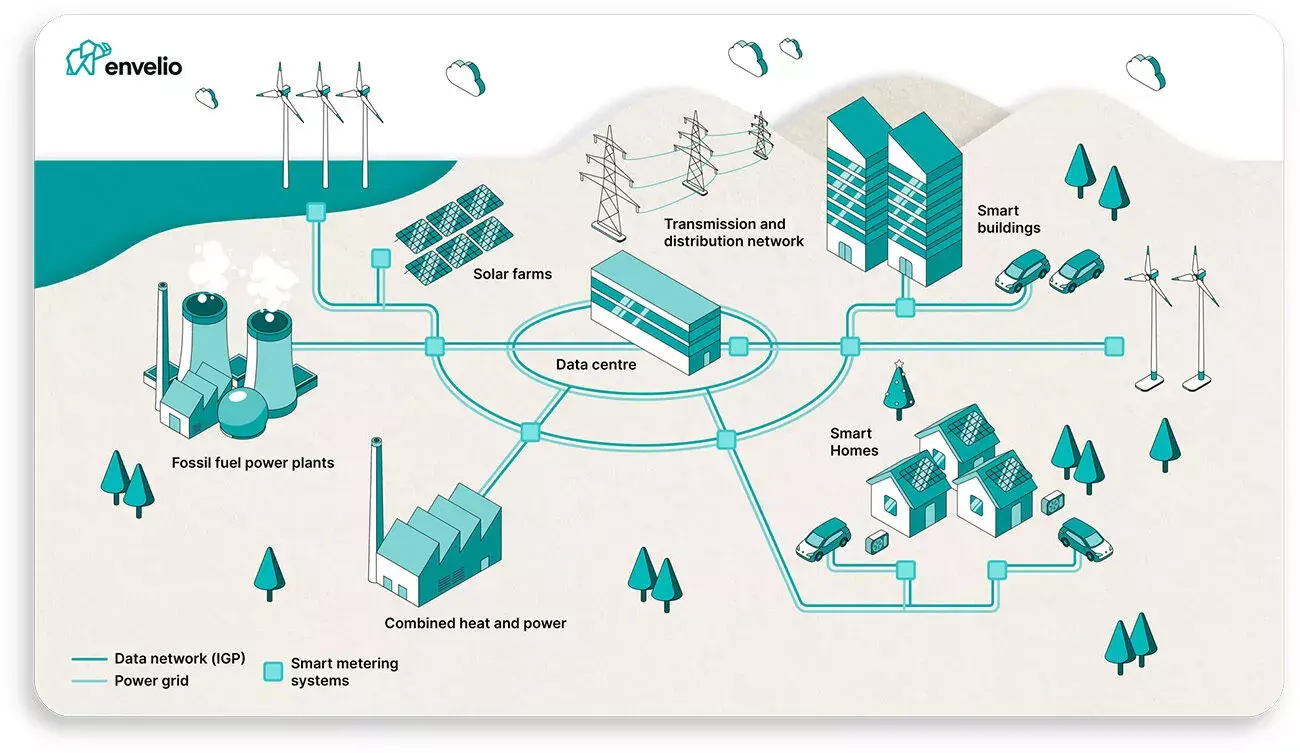
A smart energy grid will prepare the world for life after oil
EVIKA representative Andrey Shmakov shared his vision of the principles of smart energy consumption in buildings.